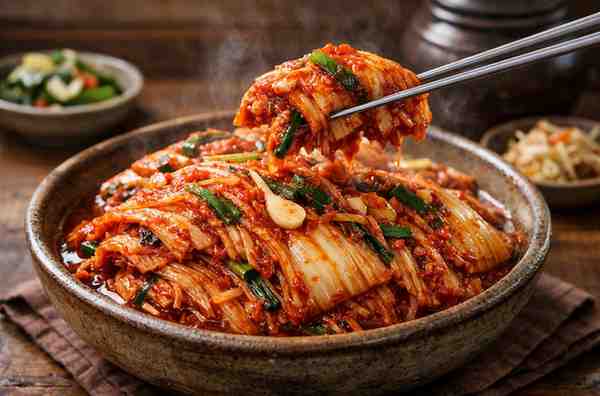
Few foods carry as much cultural depth, flavor complexity, and health significance as kimchi. Spicy, tangy, and packed with character, kimchi is more than just a side dish—it’s the heart of Korean cuisine and a symbol of tradition that has stood the test of time.
From humble home kitchens to fine dining tables around the world, kimchi continues to captivate taste buds and nourish bodies.
What is Kimchi?
Kimchi is a traditional fermented dish from South Korea made primarily from vegetables (most commonly napa cabbage or radish) and seasoned with a mixture of chili powder, garlic, ginger, fish sauce, and other spices.
The fermentation process gives kimchi its signature:
- Tangy flavor
- Slightly sour aroma
- Deep umami richness
A Brief History of Kimchi
Kimchi dates back over 2,000 years, originating as a method of preserving vegetables for harsh winters. Before refrigeration, fermentation allowed people to store food for long periods without spoilage.
Over centuries, kimchi evolved with the introduction of chili peppers in Korea during the 16th century, transforming it into the spicy dish we recognize today.
Today, kimchi is such an important part of Korean identity that it’s celebrated through traditions like Kimjang—a communal event where families and neighbors gather to prepare large batches for winter.
Types of Kimchi
🥬 Baechu Kimchi
The most common type, made with napa cabbage.
🥕 Kkakdugi
Cubed radish kimchi with a crunchy texture.
🥒 Oi Sobagi
Stuffed cucumber kimchi, fresh and refreshing.
🌿 White Kimchi (Baek Kimchi)
A non-spicy version, milder and slightly sweet.
Each type reflects regional preferences and seasonal ingredients.
How is Kimchi Made?
The process of making kimchi is both an art and a science:
- Step 1: Salting the Vegetables – Cabbage or radish is salted to remove excess water and soften the texture.
- Step 2: Preparing the Paste – A flavorful paste is made using chili powder, garlic, ginger, fish sauce, and sometimes rice flour.
- Step 3: Mixing – The vegetables are coated thoroughly with the paste.
- Step 4: Fermentation – The mixture is stored in airtight containers and left to ferment for days or weeks, depending on the desired taste.
What Makes Kimchi Unique?
- Fermentation Power: Kimchi is rich in beneficial bacteria, making it a natural probiotic.
- Bold Flavor Profile: It combines spicy, sour, salty, and umami flavors in one dish.
- Versatility: Kimchi can be eaten on its own or used in various dishes like soups, fried rice, and pancakes.
Health Benefits of Kimchi
- Improves digestion due to probiotics
- Boosts immunity with vitamins and antioxidants
- Low in calories but high in nutrients
- Supports gut health
Its fermentation process enhances both flavor and nutritional value.
Kimchi in Modern Cuisine
- Kimchi fried rice
- Kimchi ramen
- Kimchi tacos and burgers
- Fusion dishes in modern restaurants
Chefs worldwide are embracing kimchi for its bold taste and versatility.
Cultural Significance
Kimchi is more than food—it’s a cultural identity. In Korea:
- It is served with almost every meal
- Recipes are passed down through generations
- Making kimchi is a family and community activity
The tradition of Kimjang has even been recognized by UNESCO as an important cultural heritage practice.
Why You Should Try Kimchi
- It adds depth to any meal
- It’s healthy and natural
- It introduces you to Korean culinary traditions
Even a small serving can transform a dish.
Final Thoughts
Kimchi is a perfect example of how simple ingredients can create something extraordinary. Through fermentation, time, and tradition, it becomes a dish that is both nourishing and deeply meaningful.
Whether you’re exploring Korean cuisine or looking to add a healthy twist to your meals, kimchi offers a unique experience that goes far beyond taste.
In every bite of kimchi, you’ll find history, culture, and a burst of unforgettable flavor.